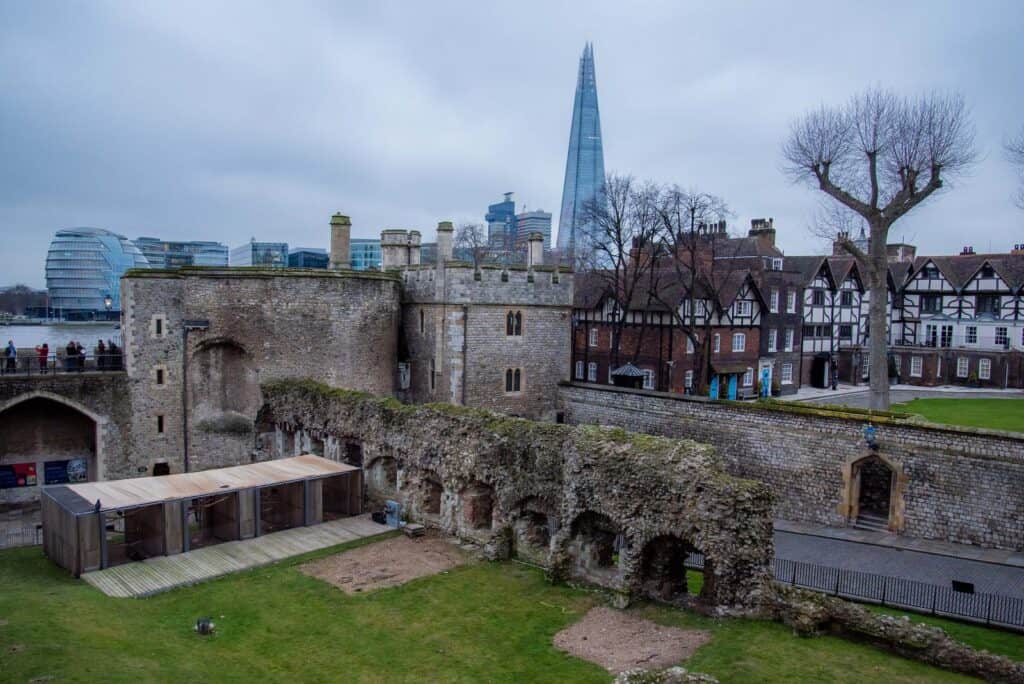
London, the vibrant capital of England, is a city steeped in rich history and timeless charm. With its ancient origins dating back to the Roman period, the city has witnessed countless events and transformations that have shaped its identity over the centuries. Join us on a historical tour through the winding streets of this iconic metropolis to discover the captivating stories that lie behind its famous landmarks and hidden gems.
Our journey begins by delving into London’s ancient past, where we uncover the fascinating remnants of Roman foundations that serve as a reminder of the city’s early beginnings. From there, we step into the medieval era, where awe-inspiring architectural marvels and magnificent castles transport us back to a time of knights and nobility.
As we move forward in time, we witness the aftermath of the Great Fire of London, which resulted in a complete transformation of the cityscape. The sweeping Georgian era follows, characterized by its elegant architecture and refined style, transporting us to an age of grace and sophistication.
The Industrial Revolution and the Victorian era emerge as significant milestones in London’s history, as the city undergoes a radical transformation into a bustling hub of innovation and progress. We explore the impact of this era and the lasting legacies it has left behind.
Our journey through time would be incomplete without delving into the impact of World War II. London’s resilience in the face of the devastating Blitz and its subsequent rebirth are commemorated in the monuments and stories that surround us.
We then turn our attention to the cultural revolution of the swinging sixties, embracing the vibrant spirit of this transformative decade and the indelible mark it left on London’s music, fashion, and art scenes.
London’s position as a global financial power takes center stage as we explore its modern economic influence, looking at its rise to prominence as a hub for commerce and finance.
No historical tour of London would be complete without delving into its artistic legacy. From world-renowned museums to cutting-edge galleries, we unveil the city’s vibrant art scene and its contributions to the world of creativity.
We take a glimpse into modern multicultural London and its celebration of diversity, as the city thrives on the harmonious coexistence of individuals from all walks of life, making it a truly global city of the twenty-first century.
Join us on this captivating journey as we unlock the secrets of Timeless London, where the past intertwines with the present, creating a city that breathes history at every turn.
The Roman Foundations: Exploring London’s Ancient Origins
The bustling metropolis of London that we know today has a rich and storied past, with its foundations dating back to the Roman era. The Romans, known for their engineering prowess, established a settlement on the banks of the River Thames around 50 AD. This marked the beginning of London’s journey towards becoming a thriving global city.
During the Roman occupation, London, or Londinium as it was known then, served as a significant trading hub and a strategic military outpost. The Romans constructed a network of roads, including the famous Watling Street, which connected Londinium to other parts of Britannia. These roads not only facilitated trade but also aided the spread of Roman culture and civilization.
One of the notable structures built by the Romans was the London Wall. This defensive fortification encircled the city and served as a testament to the Roman presence. Today, remnants of the London Wall can still be seen in certain areas of the city, offering glimpses into its ancient past.
The Romans also left their mark with the construction of the Roman Amphitheatre. Located in the heart of the city, this grand arena hosted gladiatorial combats and other spectacles, entertaining and captivating the inhabitants of Londinium. Rediscovered in recent years, the remains of the Roman Amphitheatre provide a fascinating insight into the lives of the ancient Romans in London.
The Romans brought with them a range of infrastructural developments that continue to impact London to this day. They introduced a sophisticated sewer system, known as the London Sewers, which was an engineering marvel of its time. Despite undergoing numerous modifications over centuries, some sections of the original Roman Sewers are still functional, reminding us of the Romans’ ingenuity.
As we delve into London’s ancient origins, it becomes evident that the Roman legacy is deeply ingrained in the fabric of the city. From its physical structures to its cultural influences, the Romans played a pivotal role in shaping London’s early history. Join us on this historical tour as we uncover more intriguing aspects of London’s past and unravel the stories hidden within its ancient Roman foundations.
From Medieval Marvels to Tudor Splendor: London’s Architectural Evolution
London’s architectural landscape is a testament to the city’s rich history and ever-evolving identity. From medieval times to the Tudor era, the city’s buildings have undergone remarkable transformations, reflecting the shifting cultural and aesthetic sensibilities of their respective periods.
During the medieval period, magnificent structures such as Westminster Abbey and the Tower of London were constructed, exemplifying the grandeur and spiritual significance of the era. These awe-inspiring architectural marvels still stand today, offering glimpses into London’s distant past.
As the medieval era transitioned into the Tudor period, London experienced a wave of new architectural styles and influences. The Tudor architecture, characterized by its half-timbered facades, ornate carvings, and intricate details, left an indelible mark on the city. One prominent example of this style is Hampton Court Palace, a magnificent Tudor palace that showcases the opulence and splendor of the time.
However, London’s architectural evolution during this era wasn’t limited to grand palaces and religious structures alone. The emergence of Renaissance influences brought about a change in perspective, with a greater emphasis on symmetry, proportion, and classical elements. The Inigo Jones-designed Banqueting House in Whitehall is a prominent example of this transitional architectural style, known as Jacobean architecture, which blended Tudor and Neoclassical elements seamlessly.
It is important to note that London’s architecture wasn’t solely influenced by external forces; domestic factors also played a significant role. The Great Fire of London in 1666 destroyed a large part of the city but also became an opportunity for rebuilding and modernization. Sir Christopher Wren, the renowned architect, played a pivotal role in transforming the cityscape, leaving an enduring mark through iconic structures like St. Paul’s Cathedral.
London’s architectural trajectory continued to evolve in subsequent centuries as new styles and ideas emerged. Gothic Revival, Victorian architecture, Art Deco, and modernist influences have shaped the city’s visual landscape, resulting in a diverse and eclectic mix of buildings that reflect London’s rich architectural heritage.
The Great Fire of London: Transforming the Cityscape
In the year 1666, a devastating inferno swept through the city of London, leaving in its wake a transformed cityscape. The Great Fire of London, as it came to be known, started on September 2nd in a bakery on Pudding Lane and quickly spread due to strong winds and the abundance of timber-built structures.
The fire raged for four days, engulfing iconic landmarks such as St. Paul’s Cathedral and the Guildhall. As it consumed more than 13,000 houses and nearly 90 churches, the fire forever altered the architectural landscape of the city.
In the aftermath of the fire, London faced the formidable challenge of rebuilding. Renowned architect Sir Christopher Wren played a crucial role in designing and reconstructing many of the city’s iconic structures, leaving a lasting mark on London’s skyline.
Wren’s masterpiece, the new St. Paul’s Cathedral, emerged as a symbol of hope and resilience. Its majestic dome, inspired by the great cathedrals of Europe, became an enduring testament to London’s ability to rise from the ashes.
Beyond the cathedral, the Great Fire of London instigated a shift in architectural styles. The city moved away from timber construction and embraced more resilient materials, such as brick and stone. This shift not only resulted in sturdier buildings but also influenced the development of architectural trends in the centuries that followed.
The fire presented an opportunity for city planning and restructuring. Wide boulevards replaced narrow, winding lanes, enhancing transportation and creating a more organized urban environment. This transformation paved the way for the modern cityscape we see today.
While the Great Fire of London was a calamitous event, its aftermath brought about a newfound sense of unity and determination among Londoners. The reconstruction efforts not only reshaped the physical city but also symbolized the resilience and spirit of its inhabitants.
The legacy of the Great Fire is evident in the architectural wonders that still stand, serving as a reminder of London’s ability to bounce back from adversity and reinvent itself. It is a testament to the city’s rich history and its enduring spirit.
Georgian Elegance: Capturing the Glamour of the 18th Century
The 18th century in London, also known as the Georgian era, was a time of opulence and elegance. This period, spanning from 1714 to 1830, was named after the consecutive reigns of the four King Georges of the Hanoverian dynasty. During this time, London transformed into a city known for its architectural beauty, refined fashion, and cultural pursuits.
London’s architectural landscape flourished with the rise of Georgian elegance. Influenced by classical architecture, symmetrical facades, and grand proportions, Georgian buildings emerged throughout the city. The most prominent architects of the time, such as Robert Adam and John Nash, left their mark with stunning designs that still grace London’s streets today.
One of the iconic architectural styles of the Georgian period was the Georgian townhouse. These elegant residences, characterized by their stucco facades, grand entrances, and sash windows, were built in rows along wide streets, creating a sense of uniformity and grandeur. These townhouses served as homes for the affluent upper class, showcasing their wealth and social status.
The interiors of Georgian homes reflected the sophistication of the era. Elaborate plasterwork adorned ceilings, while rooms were furnished with luxurious textiles and fine furniture. The elegance extended to the meticulously designed gardens, which often featured symmetrical layouts, fountains, and picturesque pathways.
The Georgian era was not only marked by architectural achievements but also by significant cultural and social transformations. London became a hub for intellectual pursuits, attracting writers, philosophers, and artists. Coffeehouses, like the famous Will’s Coffee House, gathered intellectuals, fostering the exchange of ideas and creativity.
London’s social scene came alive during this period as well, with extravagant balls, masquerades, and theater performances. The Georgian aristocracy reveled in fashion, with men donning powdered wigs, knee-breeches, and waistcoats, while women wore sumptuous gowns adorned with intricate embroidery.
Throughout the 18th century, coffeehouses, theaters, and gardens became spaces where the upper class and intellectuals gathered, sharing ideas, engaging in lively discussions, and entertaining themselves. The coffeehouses, in particular, played a pivotal role in shaping the intellectual and cultural life of London.
Georgian elegance left an indelible mark on London’s history, influencing subsequent architectural styles and defining the city’s cultural landscape. Even today, the Georgian buildings and their timeless beauty continue to captivate visitors, offering a glimpse into the glamour and sophistication of the 18th century.
The Industrial Revolution and Victorian London: A City Transformed
The Industrial Revolution marked a turning point in London’s history, catapulting the city into an era of unprecedented growth and transformation. As the epicenter of technological advancements and industrialization, London underwent significant changes during the 19th century.
One of the most noticeable transformations was the emergence of vast industrial areas within the city. Factories and warehouses sprung up, their chimneys billowing smoke, symbolizing the shift from handmade to machine-made goods. These industrial zones, such as the East End and Clerkenwell, became bustling centers of manufacturing and trade.
The rapid urbanization during this period led to a massive influx of people into London, seeking employment opportunities. The city’s population exploded, pushing the boundaries of the city outward and necessitating the development of new infrastructure, including the construction of railways, bridges, and roads.
The architectural landscape of Victorian London was also profoundly influenced by these changes. Stately Georgian townhouses gave way to terraced houses and apartments to accommodate the growing population. The grandeur of the Victorian era was displayed in the opulent public buildings, such as the Houses of Parliament, designed in the neo-Gothic style, evoking a sense of power and grandeur.
The advancements in technology and engineering during this time also revolutionized transportation in London. The iconic London Underground was inaugurated in the second half of the 19th century, forever changing how people moved around the city. The introduction of horse-drawn buses and trams further improved accessibility, enabling Londoners to travel with greater ease and convenience.
The social fabric of Victorian London was characterized by stark class divisions. The city became a battleground for social reform, with movements such as urban renewal and public health campaigns aiming to alleviate the squalid living conditions endured by the working class. Philanthropists and reformers worked fervently to improve sanitation, construct public parks, and address issues of poverty and inequality.
Victorian London was also a center of innovation and culture. The Great Exhibition of 1851 showcased the city’s industrial achievements to the world and served as a testament to its status as the global epicenter of commerce and innovation. Notable authors, including Charles Dickens and Arthur Conan Doyle, captured the essence of Victorian London in their works, providing invaluable insights into the city’s social dynamics and vividly depicting the contrasts and complexities of life during this era.
The Industrial Revolution and the subsequent Victorian era left an indelible mark on London, transforming it from a bustling city into a thriving center of industry, architecture, and culture. The legacy of this transformative period can still be seen in London’s urban landscape and serves as a reminder of the city’s rich and complex history.
World War II: Tracing the Impact of the Blitz on London’s History
World War II had a profound impact on the city of London, forever shaping its history and leaving an indelible mark on its landscape. The Blitz, a sustained period of German bombing attacks on the city, caused widespread destruction and loss of life, changing the course of London’s development.
As the air raid sirens wailed and the bombs rained down on London during the Blitz, the city’s buildings and infrastructure were severely affected. Many iconic landmarks, like St. Paul’s Cathedral and the Houses of Parliament, faced significant damage, but miraculously survived the onslaught. The scars of that time can still be seen in the remnants of bombed-out buildings that have now become part of London’s history.
The impact of the Blitz was not only physical but also psychological. Londoners exhibited tremendous resilience in the face of adversity, coming together to support one another and rebuild their city. The experiences during the war forged a strong sense of community and unity among its residents, a spirit that still permeates the city today.
Beyond the destruction, the Blitz also reshaped London’s urban planning and architecture. The need for better protection against future attacks led to the construction of underground shelters, including the famous London Underground tube stations that doubled as safe havens during the bombings. These shelters symbolize the city’s determination to survive and withstand any threat it may face.
Additionally, the devastation caused by the Blitz prompted an urgent need for reconstruction and regeneration in London. This led to the development of modern housing estates, such as the iconic tower blocks that sought to provide affordable accommodation for London’s growing population. However, this rapid urban development also resulted in the destruction of historic buildings and the loss of some traditional neighborhoods.
Today, as we walk through the bustling streets of London, it is hard to imagine the scenes of destruction and terror that once engulfed the city during World War II. However, the scars of the Blitz remain a poignant reminder of the resilience and strength of Londoners in the face of adversity, and a testament to the city’s ability to rebuild and adapt.
The Swinging Sixties: London’s Role in the Cultural Revolution
The 1960s were a time of immense change and cultural revolution, and London stood at the forefront as a hub of creativity, music, fashion, and social change. It was during this iconic decade that the city became synonymous with the term “Swinging Sixties.”
London became a vibrant center for youth culture and rebellion, with iconic locations such as Carnaby Street and Kings Road becoming synonymous with progressive fashion and style. Fashion designers like Mary Quant and Vivienne Westwood revolutionized the industry, introducing bold and unconventional designs that reflected the spirit of the era.
In the realm of music, London was the epicenter of the British Invasion, with bands like The Beatles, The Rolling Stones, and The Who taking the world by storm. The city’s music scene thrived with legendary venues such as the Marquee Club and the Roundhouse, showcasing groundbreaking performances and defining the sound of a generation.
Art also flourished during this time, as London became a hotbed for avant-garde and pop art movements. The Tate Gallery and the Saatchi Gallery emerged as important institutions, supporting and exhibiting the works of influential artists such as David Hockney and Bridget Riley.
Politically, London played a pivotal role in various movements and protests that sought to challenge existing norms and institutions. The anti-war protests against the Vietnam War, the fight for civil rights, and the calls for gender equality all found a voice in the streets of London.
The Swinging Sixties were a time of social liberation, and London became a melting pot of diverse cultures and ideas. The city welcomed immigrants from former British colonies, contributing to the richness and diversity of its population. The rise of multiculturalism brought new flavors, sounds, and perspectives to the city, making it a truly global metropolis.
It is through this unique amalgamation of fashion, music, art, and political activism that London in the 1960s cemented its place as a cultural icon. The city’s influence radiated across the globe, inspiring and shaping not only the decade but also future generations. The legacy of the Swinging Sixties lives on in London’s vibrant arts, fashion, and music scenes, as well as in the spirit of youthful rebellion that continues to thrive to this day.
The Rise of Global Financial Power: London’s Modern Economic Influence
London has emerged as a true powerhouse in the global financial arena, exerting a significant influence on the modern world economy. With its rich history and strategic geographic location, the city has become a magnet for finance, commerce, and investment.
One of the key factors contributing to London’s economic dominance is its status as a global financial center. The City of London, often referred to simply as the City, is home to numerous financial institutions, including the London Stock Exchange, major banks, and insurance companies. This concentration of financial power has made London a hub for international capital, attracting investors from around the world.
London’s economic influence extends far beyond its own borders. As a leading global financial center, the city plays a crucial role in facilitating international trade and investment. Its robust financial infrastructure, including a well-developed banking system and efficient regulatory framework, attracts businesses seeking financial services and support.
The City is also known for its dynamic and diverse workforce. London’s pool of highly skilled professionals from various backgrounds contributes to its competitiveness in the global economy. The city’s reputation for innovation and entrepreneurship further enhances its standing as a global economic powerhouse.
London’s modern economic influence is not solely confined to the financial sector. The city has also become a major player in other industries, such as technology, creative arts, and tourism. Silicon Roundabout, located in East London, has gained recognition as a prominent tech hub, fostering innovation and attracting global tech giants.
London’s position as a leading financial and economic center has been further reinforced by its connectivity and accessibility. The city boasts excellent transport links, including multiple international airports, making it a gateway for business and travel. Its time zone, which overlaps with both Asia and the Americas, enables seamless global communication and round-the-clock trading.
London’s rise as a global financial power and its modern economic influence have transformed the city into a beacon of economic strength. Its status as a global financial center, diverse workforce, and strategic location continue to attract businesses and investors, ensuring its place at the forefront of the global economy.
London’s Artistic Legacy: Exploring Iconic Museums and Galleries
London’s artistic legacy is truly remarkable, with a vast array of museums and galleries that showcase the city’s rich cultural heritage. From world-class art collections to unique exhibitions, London offers an unparalleled experience for art enthusiasts and history lovers alike.
One of the most iconic institutions is the British Museum, home to a vast collection of art and artifacts from around the world. Spanning centuries, visitors can explore ancient Egyptian relics, Greek sculptures, and even cultural treasures from Asia, Africa, and the Americas.
For those with a passion for modern and contemporary art, the Tate Modern is an absolute must-visit. Located in a converted power station, this gallery houses an impressive collection of works by renowned artists such as Picasso, Warhol, and Hockney. The architectural marvel itself is a sight to behold.
Another gem is the National Gallery, located in Trafalgar Square. Showcasing European paintings from the 13th to the 19th centuries, visitors can marvel at masterpieces by Van Gogh, Da Vinci, and Renoir, among many others. The gallery’s stunning architecture and panoramic views of the city only add to the experience.
A visit to London wouldn’t be complete without exploring the Victoria and Albert Museum, renowned for its diverse collection of art and design. From fashion and photography to ceramics and furniture, this museum celebrates creativity in all its forms.
For those interested in the works of William Shakespeare, a visit to the reconstructed Globe Theatre is a must. Here, you can immerse yourself in the world of the bard, watching live performances of his greatest plays in an authentic Elizabethan setting.
London’s artistic legacy is not limited to traditional museums and galleries. The streets themselves serve as an ever-changing canvas for incredible street art. Areas like Shoreditch and Brick Lane are renowned for their vibrant and dynamic street art scene, where you can discover stunning murals and graffiti by both established and emerging artists.
Whether you’re a lover of classical art, contemporary masterpieces, or street art, London offers an artistic experience like no other. Its museums, galleries, and streetscapes tell the stories of creativity, innovation, and cultural diversity that have shaped the city’s artistic legacy.
Modern Multicultural London: Embracing Diversity in the Twenty-First Century
London, the vibrant capital of the United Kingdom, stands as a testament to the power and beauty of cultural diversity in the modern era. As we delve into the twenty-first century, it becomes evident that London is a melting pot of various cultures, religions, and ethnicities, creating a rich tapestry of traditions and experiences.
One of the striking features of modern London is its thriving international culinary scene. The city is adorned with a myriad of restaurants, cafes, and street food markets representing flavors from around the globe. From traditional British pubs serving classic fish and chips to trendy fusion eateries blending Eastern and Western cuisines, London’s food culture reflects its diverse population and caters to every palate.
London’s architectural landscape also showcases its multicultural character. Walking through the city streets, one can witness a juxtaposition of historic landmarks and contemporary skyscrapers. Magnificent structures like Westminster Abbey and the Tower of London offer a glimpse into the city’s past, while the iconic Shard and Gherkin buildings symbolize its modern aspirations. This fusion of architectural styles mirrors the city’s embracing of its multicultural identity.
Beyond its food and architecture, London boasts a thriving arts and music scene that celebrates cultural diversity. Galleries and museums exhibit works of art from different periods and regions, allowing visitors to appreciate a vast array of artistic traditions. Theaters and concert halls resonate with performances that reflect the eclectic artistic expressions of London’s multicultural population.
London’s local communities play an integral role in nurturing its cultural tapestry. Neighborhoods like Brick Lane, Brixton, and Notting Hill have become renowned for their vibrant street art, independent shops, and cultural festivals. These areas provide a platform for different communities to express their unique identities and showcase their traditions, fostering a sense of togetherness and mutual respect.
London’s multiculturalism is further exemplified by its diverse calendar of events and celebrations. From Diwali and Chinese New Year to Notting Hill Carnival and Pride Parade, the city takes pride in hosting a multitude of festivities that bring people from all walks of life together. These events serve as a reminder that London is a city that celebrates and values its diverse communities.
Modern multicultural London is a testament to the power of unity and diversity. With its international cuisine, architectural blend, artistic expressions, community-centered neighborhoods, and festive celebrations, the city showcases a harmonious coexistence of various cultures, creating a vibrant and inclusive identity that makes London truly extraordinary.
Conclusion
London’s timeless charm and rich history have made it a captivating destination for history enthusiasts and culture lovers alike. From its Roman foundations to its modern multicultural vibrancy, the city has continuously evolved and transformed over the centuries.
Exploring London’s ancient origins, we discovered the Roman foundations that laid the groundwork for the city’s growth. Moving forward in time, we witnessed the architectural evolution from medieval marvels to Tudor splendor, each era leaving its mark on the cityscape.
The Great Fire of London brought about both devastation and renewal, transforming the city and giving rise to the Georgian elegance that characterized the 18th century. As the Industrial Revolution took hold, Victorian London emerged, with its industrial prowess reshaping the city’s landscape and social fabric.
London’s history took a tumultuous turn during World War II, as the city endured the devastating impact of the Blitz. However, it rose from the ashes, exemplifying resilience and rebuilding to forge a new future.
The Swinging Sixties marked a cultural revolution in London, with the city becoming a hub of music, fashion, and artistic expression. This vibrant era further shaped London’s identity and influence on a global scale.
London’s rise as a global financial power in the modern era has further solidified its position as a leading economic powerhouse, attracting businesses and professionals from around the world.
While London’s history and architectural wonders are undeniably impressive, its artistic legacy is equally remarkable. The city boasts iconic museums and galleries that house some of the world’s most celebrated art collections, making it a haven for art enthusiasts.
As we delve into the twenty-first century, London’s embrace of diversity and multiculturalism continues to define its character. The city thrives on its vibrant blend of cultures, making it an inclusive and dynamic metropolis.
London’s historical tour takes us on a remarkable journey through time, showcasing the city’s enduring allure and the myriad influences that have shaped its past, present, and future. Whether exploring ancient ruins, admiring stunning architecture, or immersing oneself in artistic and cultural experiences, London offers a unique and timeless experience that captivates visitors from across the globe.


