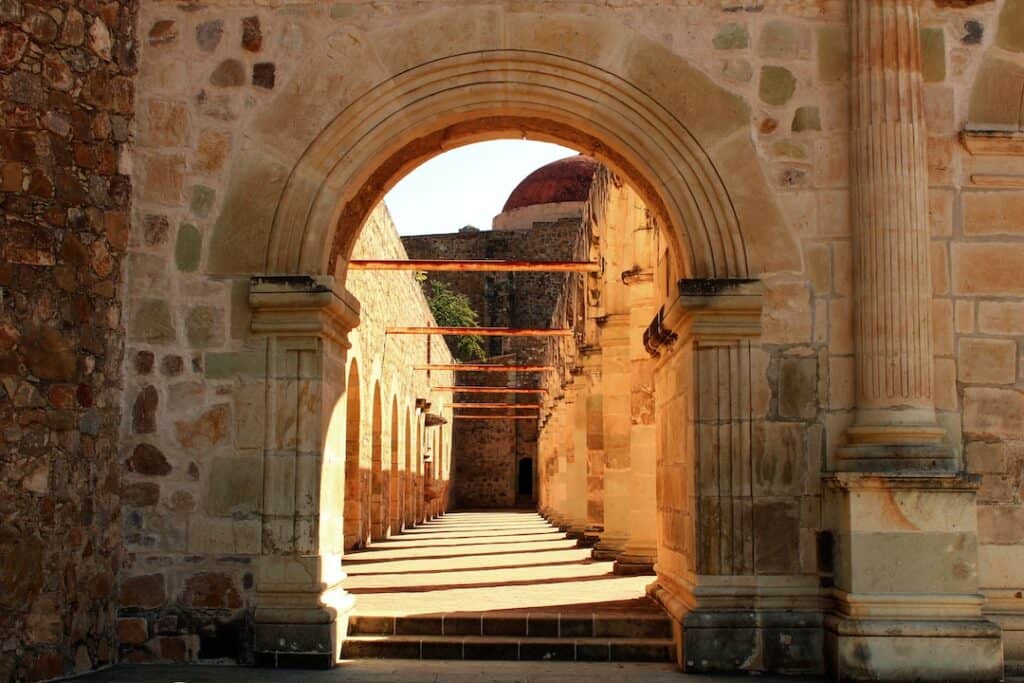
Oaxaca, located in the southwest region of Mexico, is known for its vibrant culture, rich history, and incredible cuisine. But beyond those hallmarks of Oaxacan culture lies an equally essential aspect—its stunning architecture. The city is home to a wealth of architectural treasures, some dating back over 500 years.
The buildings in Oaxaca have been influenced by various architectural styles throughout history, and a walk through the city offers an exceptional opportunity to witness the evolution of architecture over time. As we explore the city’s architecture, you’ll develop a deeper understanding of how it evolved from the pre-Columbian era to the modern age.
The blend of Pre-Colombian and Spanish colonial styles is evident in the city’s numerous historic buildings. The rich Baroque and Classicist styles that emerged with the construction of churches and major public buildings in the 17th and 18th centuries are still present today. Gothic and Neoclassical styles emerged later, and Art Nouveau and Art Deco architectures came onto the scene in the early 20th century. Modern architects, both local and from elsewhere in the world, have since incorporated new innovations into the city’s skyline.
Oaxaca’s stunning architecture is a symbol of its rich indigenous cultural heritage and, through the passage of time, has become a testament to the city’s resilience and pride.
How Oaxaca’s Architectural Styles Developed Through Time
Oaxaca, a culturally rich state in Southern Mexico, boasts a vast array of architectural styles that have been developed through time. A walk through the city streets takes one on a historical journey dating back to the Spanish Conquest and the subsequent colonization. These architectural styles developed through time, drawing influence from various historical periods, including Pre-Hispanic cultures, the Spanish colonization era, as well as the modern-day.
The Pre-Hispanic cultures of Mexico, which include the Aztecs and the Mixtecs, created their unique architectural styles, which were characterized by simple and functional designs. The Mixtecs, for example, designed structures to withstand earthquakes, common in the region, by the use of braces and columns for support. These designs can be found in some of the region’s archaeological sites such as Monte Albán and Mitla.
The arrival of the Spaniards in the 16th century marked the dawn of a new era of architectural designs, which fused European building techniques with Pre-Hispanic concepts. This era of architecture characterized by the use of stone, mortar, and wood, created designs such as churches, convents, and civil buildings. The dominance of Baroque, Renaissance, and Gothic styles can be seen in Oaxaca’s buildings, including the Chuch of Santo Domingo de Guzmán and the Ex-Convent of Santa Catalina.
Following the Mexican Revolution in the early 20th century came modern designs that broke away from traditional techniques. The use of iron, glass, and concrete produced buildings that reflected serenity, simplicity, and functionality. The Luis Barragán House and Studio, for example, reflects the International Style Movement, characterized by cleanliness and simplicity.
Art Deco architecture became popular in the region in the 1920s, with the introduction of streamlined buildings with clean lines and geometric shapes. This featured well in the architecture of the Thomas M. Gillow building. Following similar notions, the mid-century brought a new wave of modern architecture characterized by curvilinear forms and bold colors.
In conclusion, Oaxaca’s architectural styles have a rich array of inspiration that has its roots in various historical periods, from ancient Pre-Hispanic designs to the modern-day architecture characterized by bold colors and exciting shapes. The state of Oaxaca is not lacking in architectural styles that continue to be developed with a blend of influences from the past and present.
Discovering the Beauty of Oaxacan Baroque and Classicist Styles
Oaxaca’s beautiful architectural heritage is a testament to the city’s diverse cultural heritage. From Aztec ruins to Spanish colonial buildings, Oaxaca’s architecture combines a variety of different styles that have influenced its evolution through the centuries. One of the most prominent styles in Oaxaca is Baroque, known for its elaborate, decorative elements and use of light and shadow to create dramatic effect. The Baroque style in Oaxaca combines elements from Europe and Mexico, making it unique to the region.
Another style that is prominent in Oaxaca is Classicism, which emerged in the mid-18th century as a reaction against the ornate and complex Baroque style. Classicism was known for its clean lines, symmetry and proportionality. Many of the buildings in Oaxaca’s historic center, such as the Palacio de Gobierno and the Catedral de Oaxaca, were built in this style.
One of the most striking examples of Baroque architecture in Oaxaca is the Church of Santo Domingo de Guzmán, which is considered by many to be one of the most beautiful churches in Mexico. The church’s façade is adorned with intricate carvings of saints and angels, and its interior boasts an impressive collection of Baroque art and sculpture.
Another impressive Baroque building in Oaxaca is the Church of San Juan de Dios, which was built in the late 18th century. The church’s façade is decorated with a beautiful relief of San Juan de Dios, while its interior boasts a stunning altarpiece that is considered to be one of the most beautiful examples of Baroque art in Mexico.
However, the Baroque style was not universally embraced in Oaxaca, and in the early 19th century, a new trend emerged that emphasized simplicity and symmetry. This trend, known as neoclassicism, can be seen in many of Oaxaca’s public buildings, such as the Palacio de Gobierno and the Teatro Macedonio Alcalá, which was built in 1903.
Overall, Oaxaca’s Baroque and Classicist styles are a testament to the city’s rich cultural heritage and the diversity of its architectural evolution. From the elaborate Baroque facades of Santo Domingo de Guzmán to the clean lines of the Palacio de Gobierno, Oaxaca’s architecture is a feast for the eyes.
Basking in the Splendor of Oaxaca’s Colonial Architecture
Oaxaca’s colonial architecture is an embodiment of its rich history and European influences. The Spanish colonization of Mexico in the early 16th century introduced new architectural styles to the region. The colonial period lasted for about three centuries and had a tremendous impact on the architectural design of the city. The baroque and neoclassical styles apparent in many buildings in the region reflect the influence of the Spanish colonizers.
The most remarkable feature of the colonial architecture in Oaxaca is the intricate ornamentation and decoration. The exteriors of buildings are adorned with intricate details such as stucco moldings, stone carvings, and frescoes. One of the most prominent displays of this intricate style is the Santo Domingo church in the city center. The interior of the church is a marvel to behold with gold leaf finishes and colorful frescoes that adorn the walls and ceiling.
Wandering through the streets of Oaxaca, you’ll find numerous colonial-era buildings that have been converted into museums, galleries, hotels, or restaurants. Many of the buildings have been meticulously restored to their former grandeur and are now captivating tourist attractions. The Casa de la Ciudad, one of the most impressive examples of colonial architecture, houses the city’s cultural museum. It is a magnificent 16th-century building with a façade adorned with ornate stone work.
The Plaza de Armas, which has served as the city’s center throughout the colonial period, is lined with magnificent colonial buildings. The Government Palace, also located on the Plaza, is a stunning building that houses some of the region’s most significant historical artifacts. Its façade features elaborate stone carvings, and the interiors are decorated with murals depicting Oaxaca’s complex history.
The colonial architecture in Oaxaca is an impressive display of the region’s rich heritage. It’s a testament to the skill and ingenuity of the masons, artisans, and architects who created these magnificent structures. Exploring the colonial architecture of Oaxaca is a journey back in time, allowing visitors to immerse themselves in the country’s fascinating colonial past.
Gothic and Neoclassical Styles Unveiled in Oaxaca’s Buildings
The architecture of Oaxaca reflects the blend of different cultures that have influentially shaped the region. Gothic and Neoclassical architectures emerged as later styles in Oaxaca after the Colonial period. These styles are characterized by their exquisite details, aesthetics, and decoration, which are simply breathtaking to behold.
Gothic architecture was introduced in the 16th and 17th centuries, with some of the earliest examples being the Andalusian-style buildings. The style is defined by unique features like pointed arches, ribbed vaults, and rose windows. Neoclassical architecture, on the other hand, was introduced in the late 19th century in Mexico, and it included classical elements that were previously used in ancient Greece and Rome.
One of the remarkable examples of Gothic architecture is the Oaxaca Cathedral, which was built during the 16th century. The Cathedral is a masterpiece, with towering spires, intricate carvings, and stone sculptures. The Cathedral’s beautiful interior is illuminated by large stained glass windows and decorated with exquisite paintings and murals.
The neoclassical style can also be seen in buildings like the Macedonio Alcala Theater, which was built in the late 19th century. The theater features a beautiful entrance adorned with columns and capitals that were once used in ancient Greek temples. The grandeur of the building’s exterior complements the beauty of its interior, which is equally impressive.
Neoclassical architecture is also evident in many other buildings, such as the Juarez Theater and the Palacio de Gobierno, both built in the late 19th century. These buildings feature elegant designs and intricate details that are typical of the neoclassical style.
Today, the Gothic and neoclassical styles are still popular in the design and construction of new buildings in Oaxaca, as they remain a timeless expression of beauty and elegance. Visitors to Oaxaca cannot miss the chance to experience the grandeur of these styles in the region’s buildings and landmarks, and appreciate the unique blend of history, culture and art that they represent.
Oaxaca’s Art Nouveau and Art Deco Buildings – A True Treasure
Oaxaca is not just famous for its colonial architecture; it also boasts many examples of Art Nouveau and Art Deco styles. These architectural styles emerged in the late 19th and early 20th centuries, marked by ornamental patterns, geometric shapes, and vibrant colors. One of Oaxaca’s most outstanding examples of Art Nouveau is the Eduardo Vasconcelos Auditorium, also known as the “Teatro de los Heroes.” Built in 1909, it features a stunning facade with curved lines and intricate floral decorations. The interior is just as impressive, with a lavish lobby and a seating area designed in the shape of an amphitheater. Another gem of Oaxaca’s Art Nouveau architecture is the Mercado Juárez. Built in the early 20th century, it features a unique mix of Art Nouveau and Neo-Mudéjar styles. The market has an impressive entrance with an intricate ironwork gate, and the interior is decorated with colorful tiles and stained glass windows. Moving on to Art Deco, the Casa de la Ciudad, or House of the City, is a magnificent example of this style. Built in 1929, it features a sleek, streamlined facade with a central tower and rounded corners. The interior is no less impressive, with stained glass windows and decorative reliefs depicting the history of Oaxaca. Another Art Deco masterpiece is the Casa Crespo. This building served as the residence of a wealthy family in the early 20th century and is now a restaurant. The facade boasts symmetric curves, a central balcony, and geometric details. The interior features an elegant staircase and stained glass windows. In addition to these stunning examples, Oaxaca has many more Art Nouveau and Art Deco buildings that are worth exploring. These architectural styles represent a departure from Oaxaca’s colonial past and showcase the city’s diversity of cultural influences over the centuries.
Oaxaca Today: Modern Architectural Innovations in the City’s Skyline
Oaxaca is a city that has a rich history of architectural styles, dating back to the ancient Zapotec and Mixtec civilizations. However, the city did not stop evolving after the colonial period, and today it has become a hub for innovative modern designs in architecture.
One of the most prominent examples of modern architecture in the city is the Santo Domingo Cultural Center. It is a modern building with a distinctive shape that contrasts with the surrounding colonial structures. The structure is made up of concrete and glass, and its design plays with the contrast of light and darkness.
The Oaxaca Convention Center is another modern marvel that is located in the city. The convention center has a unique design inspired by the surrounding mountains. The building looks like a series of mountains that are stacked on top of one another and is a perfect example of how modern architecture can harmonize with its natural surroundings.
Oaxaca’s emphasis on cultural preservation is reflected in the modern architectural designs seen in the city. The Biblioteca Infantil Tragaluz is one such example. This children’s library is a modern building with a playful design that makes it look like a stack of colorful books. However, the interior design explores the region’s history and cultural heritage, providing an immersive experience for children to learn about the city’s past.
The Casa de la Ciudad museum is another prominent modern architectural structure in the city. The museum has a unique design that incorporates several different materials, including metal and glass. The building represents a new direction in modern architecture, where sustainability and eco-friendliness are given significant importance. The building was made with environmentally friendly materials and features a rainwater harvesting system to conserve water.
Overall, Oaxaca’s modern architecture represents an innovative approach to design that pays respect to the city’s rich history and cultural heritage while incorporating new materials and techniques. Modern architecture has given Oaxaca’s skyline a new life, blending seamlessly with the colonial buildings and traditional art that have defined the city for centuries.
Conclusion
Oaxaca’s stunning architecture is a testament to the city’s rich history and cultural heritage. From the pre-hispanic era to modern times, the city has undergone significant changes in its architectural styles, leaving us with a diverse array of buildings and monuments to admire.
Exploring Oaxaca’s architectural heritage is an enriching experience that gives us a glimpse into the past and present of this beautiful city. From colonial buildings to innovative modern structures, every corner and street showcases a different story and a unique piece of architecture.
One of the most striking things about Oaxaca’s architecture is the fusion of indigenous and European elements in many of the buildings. This combination has resulted in some of the most beautiful and unique structures in Mexico, making Oaxaca a must-visit destination for architecture enthusiasts.
In conclusion, exploring Oaxaca’s architectural marvels is one of the best ways to immerse oneself in the city’s culture and history. Its magnificent structures tell the stories of the people who created them and the events that shaped their design. We hope this article has inspired you to plan a visit to Oaxaca to witness its stunning architecture firsthand.


