Welcome to our blog post, where we will embark on a journey to learn all about the Mesoamerican culture of Oaxaca. This southwestern Mexican state is famous for its vivid history and geographical landmarks, as well as its indigenous culture, which dates back thousands of years.
Our exploration of Oaxaca’s culture will take us on a chronological trip through the rich history of the ancient civilizations that once roamed its land, such as the Zapotecs and the Mixtecs. We will learn about their social structures, religious beliefs, and cultural practices that shaped their society.
Moreover, we will dive into Oaxaca’s vibrant artistic expressions, which are deeply ingrained in its Mesoamerican history. From the colorful textiles to the ornamental pottery, we will discover the intricate designs and techniques used by indigenous artisans in Oaxaca.
As we explore the culture of Oaxaca, we will also delve into the significance and centrality of food in maintaining Mesoamerican identity. Oaxacan cuisine is renowned for its flavorsome ingredients and rich history, highlighting the diversity of the region’s cultural heritage.
Finally, we will witness the ongoing struggles and unwavering resilience of Oaxaca’s indigenous communities. Through centuries of colonization, political oppression, and marginalization, these communities persist in preserving their cultural heritage and identity for future generations.
This journey promises to be an insightful and enriching experience, so grab your notebook and come along as we explore the Mesoamerican culture of Oaxaca!
Legendary Religious Traditions in Mesoamerican Culture
Mesoamerican religion is a complex blend of beliefs that evolved over thousands of years. It was closely integrated with aspects of social and political structure. Religion played a fundamental role in everyday life, and the sky and earth deities were consecrated on a yearly basis by the Templo Mayor rituals, the Aztec’s most famous religious ceremony.
The Mesoamerican elite practiced bloodletting, self-mutilation, and various other acts of penance, believing that the gods required both symbolic and literal blood sacrifices. They also believed in the power of human appeal and conducted elaborate ceremonies and rituals to communicate with the deities, asking for healthy crops, fertility, rain, and strength in battle.
The religious influence of Mesoamerican cultures extended beyond the borders of today’s Mexico. The Maya, for example, believed that gods resided in all natural elements, from caves to trees to bodies of water. The Maya also used their descriptive glyphs and number systems to record their history and religious beliefs.
Animals played an essential role in Mesoamerican religion. The jaguar, an animal revered for its strength, appeared in many Mesoamerican art pieces. The image of the serpent, often depicted with intricate, scroll-like curves, was widely used in religious motifs and iconography. Mesoamerican priests and shamans also used fungi and other hallucinogenic plants to induce altered states of consciousness, which they believed allowed them to communicate with the gods and perform supernatural feats.
Mesoamerican religion, like all ancient faiths, was intertwined with mythologies and legends, passed down orally from generation to generation. The Popol Vuh, the holy book of the Maya, recounted their creation myth and the gods’ origins. Similarly, the Aztecs believed in an Aztec creation myth involving the sacrifice of a goddess to create the universe. The ancient Mesoamerican religious traditions still influence modern-day communities, as religious festivals and celebrations continue to honor the same deities.
The Fascinating Artistic Expressions of Oaxaca’s Indigenous Peoples
Art is a significant part of Oaxacan culture as it represents the deep-rooted traditions of its indigenous peoples. Throughout history, the art produced by the Mixtec and Zapotec communities has been considered one of the most spectacular in Mesoamerica.
The art of Oaxaca’s indigenous peoples includes a range of techniques, including pottery, textiles, painting, sculpture, and jewelry. Mixtec and Zapotec artists are known for their exceptional skills in metallurgy, as well as for their ability in using natural pigments to create paintings and murals.
One of the significant highlights of Oaxacan art is alebrijes – brightly colored Mexican folk art sculptures of fantastical creatures. The art of alebrijes came to global attention in the 20th century, with the influence of the Mexican artist Pedro Linares. It has since become an essential part of Mexico’s cultural heritage.
Oaxacan textiles are another significant aspect of indigenous art, and their production is an intricate and time-consuming process. The weavers produce a wide variety of textiles, including rebozos (shawls), huipiles (blouses), and tapetes (rugs). These textiles often have symbolic meanings and are used to express the weavers’ identity, history, and spirituality.
Today, Oaxacan artists are embracing new techniques to explore their creativity further. The recent emergence of street art in Oaxaca has also allowed artists to create public murals and graffiti influenced by traditional imagery and themes.
Oaxacan art has not only defined its indigenous communities but has also influenced contemporary art globally. In museums and galleries worldwide, visitors can appreciate the beauty and significance of indigenous Oaxacan art throughout history. The artistic expressions of Oaxaca’s indigenous peoples provide a unique insight into Mesoamerican history and culture.
The Rich History of Oaxacan Civilization During the Pre-Columbian Era
The region of Oaxaca in southern Mexico has a remarkably rich history that dates back to the pre-Columbian era. During this time, Oaxaca was home to numerous indigenous cultures and civilizations, including the Zapotec, Mixtec, and Mixe peoples. These civilizations thrived for centuries, developing complex systems of government, agriculture, and trade.
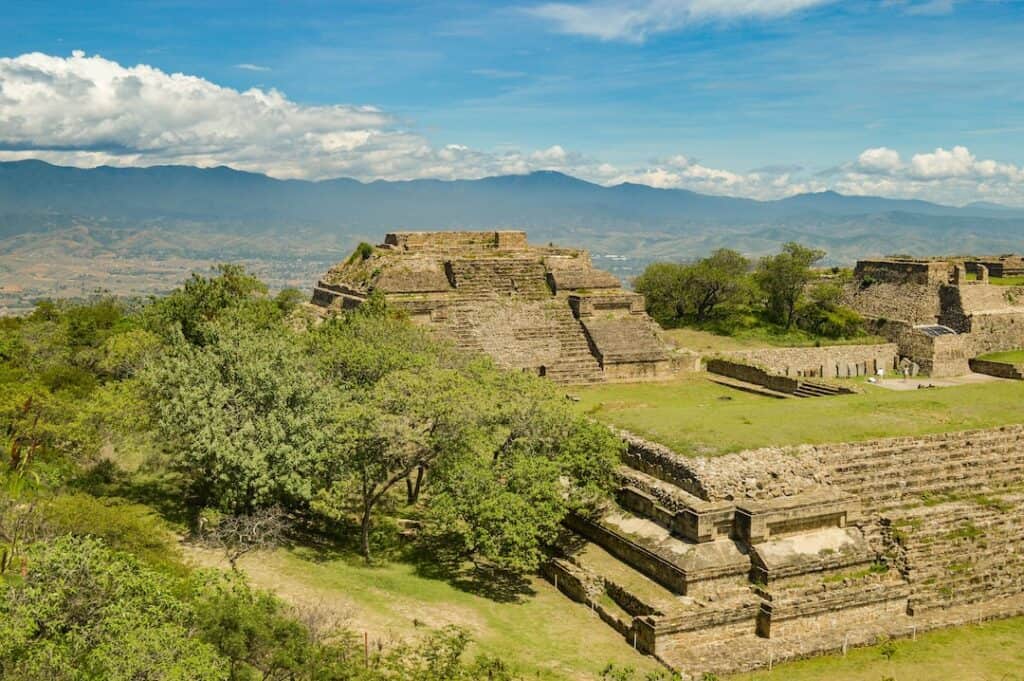
One of the most notable pre-Columbian civilizations in Oaxaca was the Zapotec civilization, which emerged in the region around 500 BCE. The Zapotecs developed a sophisticated system of writing, as well as impressive architecture, such as the ruins of the ancient city of Monte Albán. They also developed a complex system of governance that included a ruling class and a system of tribute payment.
Another significant civilization in Oaxaca was the Mixtec civilization, which emerged around 750 CE. The Mixtecs developed a unique form of writing, known as Mixtec codices, which were used to record important historical events and genealogies. They were also skilled goldsmiths and metalworkers, producing elaborate jewelry and other decorative objects.
The Mixe people also developed a civilization in Oaxaca, although their history is less well-known than that of the Zapotec or Mixtec. The Mixe were skilled farmers and are known for developing advanced agricultural practices, such as terrace farming and irrigation systems.
Throughout this time, Oaxaca was also a center of trade and commerce. The region’s location between the Pacific Ocean and the Gulf of Mexico made it an ideal hub for the exchange of goods such as cacao, obsidian, and textiles. As a result, Oaxaca was an important cultural center, with regular exchange of ideas and technologies between different civilizations.
Despite the dominance of these civilizations, there were also frequent conflicts between them. These often took the form of wars over land and resources, or competition for influence and power. However, despite these conflicts, the civilizations of Oaxaca remained remarkably resilient, enduring for centuries before the arrival of the Spanish conquistadors in the 16th century.
The rich history of Oaxacan civilization during the pre-Columbian era is a testament to the ingenuity and resilience of the indigenous peoples of the region. Their legacy lives on in the many archaeological sites, artifacts, and cultural traditions that continue to be celebrated in Oaxaca today.
An Exploration of the Rich Textile Traditions within Oaxacan Culture
Indigenous communities in Oaxaca, Mexico are well-known for their incredible textiles, which have been produced and worn for generations. Many of these textile traditions date back to the pre-Columbian era and are embedded deeply in the cultural heritage of the region.
One of the most well-known textile techniques from Oaxaca is the art of weaving on backstrap looms. This method involves strapping one end of the loom around the weaver’s waist and the other end to a stationary object. The weaver then uses body movements to create tension on the threads while interlacing them with a shuttle. This technique creates intricate patterns and designs that are unique to each community and even each weaver.
Dyeing techniques are also an essential part of Oaxacan textile traditions. Natural dyes from plants, minerals, and insects are used to create vibrant and long-lasting colors. Some of the most popular dyes used by Oaxacan weavers include cochineal, indigo, and zapote bark.
Another distinctive Oaxacan textile tradition is embroidery, which is often used to decorate clothing, bags, and other items. Embroidery threads are used to create designs ranging from simple geometric patterns to intricate scenes of nature and everyday life. This technique is generally practiced by women and is passed down through generations.
In recent years, many Oaxacan textile arts have gained widespread recognition and become coveted items in the global fashion industry. However, it’s important to acknowledge and appreciate the significance and history of these textile traditions and the communities that have kept them alive for centuries.
The Importance of Food in Maintaining Mesoamerican Identity
Food has always played a significant role in Mexican culture, and this is particularly true of Oaxaca. Traditional dishes hold a special place in maintaining the region’s rich cultural identity. For centuries, the Oaxacan people have relied on recipes passed down through the generations as a way of preserving their heritage and connection to the land.
The variety of local ingredients of Oaxaca is famous throughout Mexico and beyond. Staples such as corn, beans, and chiles form the base of many dishes, while the region’s unique climate allows for a broad range of fruits and vegetables to flourish. The ancient cultivation and preservation techniques are still used today, adding a deep sense of history and tradition to the food.
Many of the dishes associated with Oaxaca, such as mole, tlayudas, and chapulines, have gained recognition worldwide. Traditional ways of preparing and cooking these dishes are still common throughout the region, adding to the culinary experience of visitors and locals alike. The importance of food as an expression of Mexico’s indigenous culture has inspired chefs and food lovers to travel to Oaxaca to explore traditional recipes and techniques.
Of course, traditional dishes are more than just food- they are an expression of cultural identity and social relationships. Meals are often shared among family and friends as a way of celebrating important milestones or events. This communal aspect of eating is another way of maintaining Oaxacan identity.
As the food industry becomes increasingly dominated by mass-produced and processed foods, traditional culinary practices are at risk of being lost. The continued importance placed on traditional dishes in Oaxaca ensures that these recipes will be preserved for generations to come. The region’s rich cultural heritage, expressed through its food, serves as a reminder of the importance of preserving and celebrating diverse cultural traditions.
In conclusion, the significance of traditional foods in maintaining Mesoamerican identity cannot be overstated. Across Oaxaca, the preparation and enjoyment of traditional recipes are seen as a way of expressing deep connections with the land, ancestors, and social relationships. Those who take the time to seek out traditional Oaxacan dishes will experience not only the rich, complex flavors but a deeper understanding of the people and culture that created them.
Ongoing Struggles and Resilience of Oaxaca’s Indigenous Communities Today
Oaxaca is a spectacular land that is as breathtaking as it is culturally rich. The region is home to several indigenous people, each with its language, traditions, costumes, and cuisine. Although these communities have been able to preserve their culture for thousands of years, they still face many challenges today.
One of the biggest challenges that these communities face today is economic inequality. Oaxaca is one of the poorest states in Mexico, and many indigenous people live in extreme poverty with little access to basic necessities such as healthcare, education, and clean water. As a result, many people in these communities are forced to migrate to other cities to find work and support their families.
This economic inequality is further exacerbated by discrimination and marginalization. Indigenous people in Oaxaca often face discrimination from non-indigenous Mexicans, which can lead to limited opportunities for employment, education, and healthcare.
Despite these challenges, Oaxaca’s indigenous communities are incredibly resilient. They are deeply committed to preserving their culture and traditions. Many communities have established small businesses that sell their traditional textiles, crafts, and foods to tourists. These businesses not only provide jobs and income for the community but also help to promote and preserve their unique culture.
Additionally, there are several organizations that work to support these communities by providing access to education, healthcare, and other resources. These organizations are helping to empower these communities and improve their quality of life.
One of the most significant ways that these communities are preserving their culture is by passing their traditions onto the next generation. Indigenous elders are working tirelessly to teach their children and grandchildren about their language, traditions, and beliefs. In this way, they are ensuring that their culture will continue to thrive for future generations.
In conclusion, Oaxaca’s indigenous communities face many challenges today. However, their resilience and commitment to preserving their culture are incredibly inspiring. By supporting these communities and learning about their culture, we can help to promote and preserve their unique traditions for generations to come.
Conclusion
In conclusion, the Mesoamerican culture of Oaxaca holds a rich history that is full of fascinating experiences and traditions. From the pre-Columbian era to the present day, the indigenous communities of the region have managed to preserve their unique heritage through their deep-rooted beliefs, customs, and practices.
Their religious traditions have remained strong, as seen through their numerous mythologies, their veneration of nature, and their ceremonies and rituals that continue to be observed to this day.
The artistic expression in Oaxaca is also robust, with its indigenous communities producing world-renowned crafts that represent their culture, such as weaving, pottery, and wood-carving. These practices have continued to thrive over the years, and they have become an essential part of the cultural identity of Oaxaca.
Food has also played a significant role in Mesoamerican culture, with its traditional dishes being an expression of the region’s diverse and unique flavors and ingredients. Many of these dishes have been passed down through generations and continue to serve as an important element of maintaining their cultural identity.
Lastly, the ongoing struggles and resilience of Oaxaca’s indigenous communities provide an essential context for understanding the present-day realities of Mesoamerican culture. Despite facing numerous challenges, including political marginalization and economic struggles, these communities continue to uphold their traditions, language, and culture, promoting the rich legacy of their remarkable history.
Overall, the culture of Oaxaca is a testament to the strength and beauty of Mesoamerican civilization, with its rich history, unique traditions, and ongoing resilience standing out as a remarkable example of human diversity and cultural variation.


